A refresh is enough if your brand’s character and message still hold true, and only its look has grown tired or drifted apart. You need a rebrand if the company has changed fundamentally, for example it has a new name, or the old identity now says something different from what you stand for today.
1. The two side by side
| Aspect | Refresh | Rebrand |
|---|---|---|
| What it keeps | The basic shape of the logo and the voice of the brand. | Only what serves the future brand as well. |
| What it changes | It refines the logo and brings the touchpoints into line. | It starts from a new strategy, and the whole visual system is built for it. |
| Effect on your audience | Recognised straight away, it just feels fresher. | A new introduction, best accompanied by communication. |
| Switchover | Touchpoints can be replaced gradually. | A planned switchover, for which every main touchpoint is ready. |
| Risk | Small, the familiar image stays. | Higher, so it is worth putting the brand’s promise into words first. |
2. Which one to choose
A refresh is enough if
- your brand is well known, and your audience likes its current character
- your touchpoints have drifted apart over the years, and everyone uses the logo differently
- your service and your target audience have essentially stayed the same
- you need a fresher look for an anniversary or a new campaign
You need a rebrand if
- your company gets a new name, or several companies come under one brand
- you are addressing a new audience or a new market
- your current identity makes your company look smaller than it is
- even you can no longer use the old look consistently
3. Two examples from our work
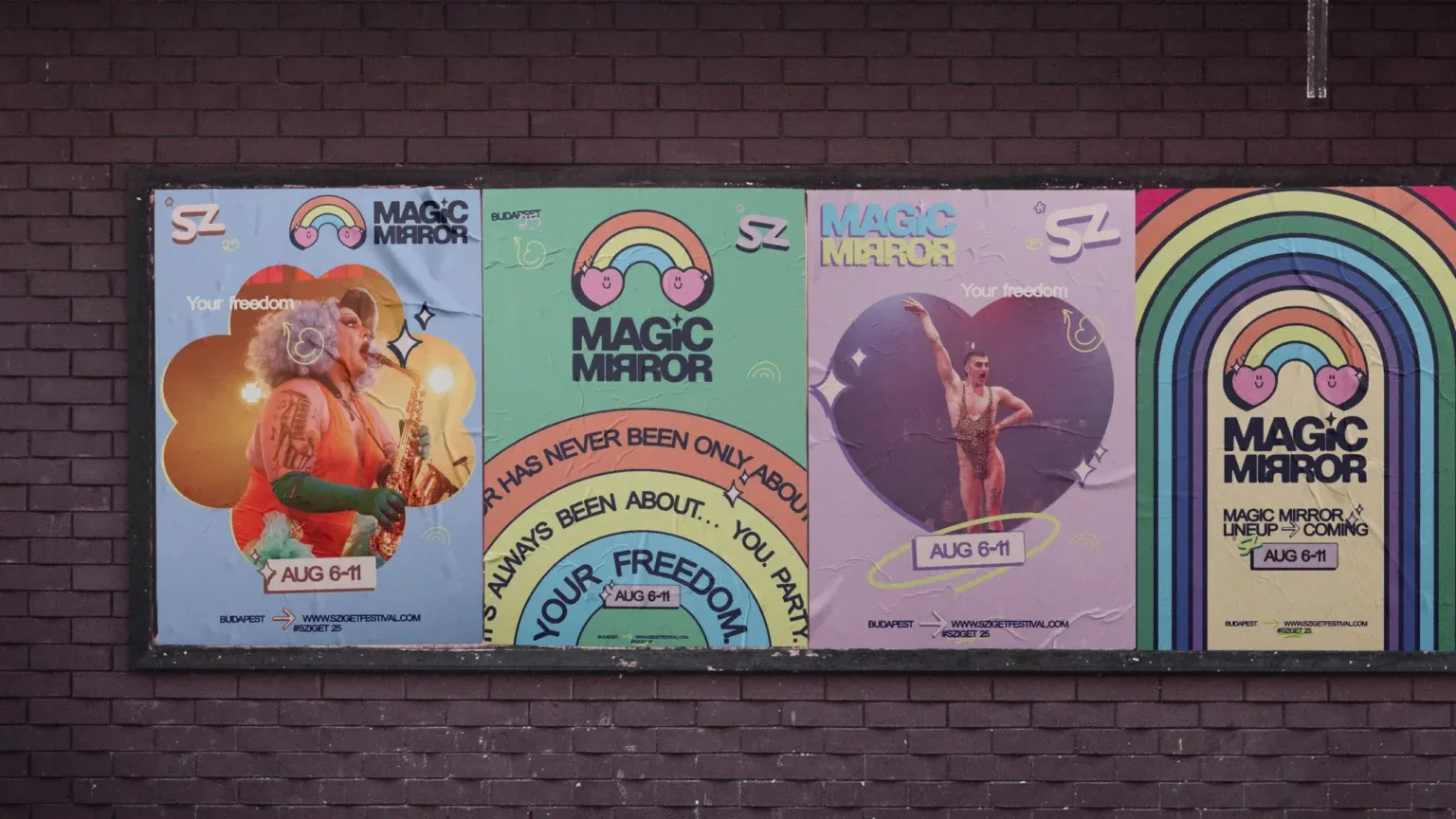 Sziget, Magic Mirror identity For Magic Mirror, a sub-brand of Budapest’s Sziget Festival, the rainbow motif stayed because it carries the brand’s message. We refreshed the typefaces and the colours so that the sub-brand fits well into the Sziget logo family. See the case study
 Bamba Marha rebrand and campaign For the tenth birthday of Bamba Marha, a Budapest burger chain, we redesigned the entire brand while keeping its characteristic orange and black world and its energetic voice, and arranged everything into one consistent system from the logo through packaging to social media. See the case study
4. How to decide what stays
To decide, first gather what your clients associate with your brand today. Whatever is strong in this and will remain true in the future is worth keeping, even if we refine its form.
If you are curious about your audience’s view as well, a few conversations with your best clients reveal a lot about what they like in your current brand, and what even they now see as dated.
We can assess this with a brand audit. We gather where and how your brand appears today, and set out the inconsistencies in a table. This usually makes it clear whether some tidying up is enough or new foundations are needed.
5. What is usually worth keeping
Even a rebrand does not mean throwing everything away. The strongest brand elements are often small details that your clients remember without realising it.
- The distinctive colour that makes your brand recognisable from afar.
- A characteristic element of the logo, for example a shape or the particular drawing of a letter.
- The voice of the brand, if your audience likes the way you speak to them.
- A well-known motif or slogan that has already become part of your brand.
Keeping these builds a bridge between the old and the new identity. Your clients feel at home in the new look as well, and see the switchover as the brand moving forward.
6. Planning the switchover
With a rebrand the switchover matters as much as the design itself. It is worth listing every touchpoint, from the shop sign to the email signature, and deciding when each one is replaced. This way two identities do not live side by side for months.
A refresh is easier, because the touchpoints can be replaced gradually as old stock runs out. Your audience hardly notices the transition, only that the brand has become tidier.
7. Frequently asked questions
How often is it worth refreshing a brand identity?
There is no general rule. It is worth a look when your touchpoints no longer resemble each other, or when the look of your brand has not kept up with where your company has got to.
Will I lose my existing clients with a rebrand?
If the elements you keep and the communication are well planned, your loyal audience will recognise the brand. That is why we always start with the strengths of your current brand.
How should I announce the new identity?
The announcement is part of the rebrand. It is worth briefly telling the story of why the brand changed and what it has kept, so your clients understand the change and see it as a continuation of the brand they know.
Do I need a new logo for a refresh?
Not necessarily. Often it is enough to refine the logo and create its variations, so that it works at every size and on every touchpoint.
What carries over from the old guidelines into the new identity?
Whatever works well on your touchpoints today. In the new guidelines every rule follows the new system, and we only keep old elements if they fit into it.