The cost depends first of all on how many touchpoints we design, and on how much of the brand has to be worked out from the ground up. It also matters how many people make the decisions on your side, and how much finished, editable material you receive at handover.
1. The factors that drive the scope
| Factor | Smaller scope | Larger scope |
|---|---|---|
| Starting point | Your name and target audience are settled, and it is clear what you offer. | We shape the positioning of the brand together in a workshop. |
| Number of touchpoints | Business card, letterhead, the basics of the website and the social profiles. | Packaging, vehicle livery, office and event material, digital touchpoints. |
| Directions | One or two directions you can choose from quickly. | Several distinct directions, with worked-out applications. |
| Guidelines | A short usage guide for the logo. | Detailed brand guidelines for every main touchpoint. |
| Decision-makers | One person decides. | Several managers or a group of owners decide together. |
| Files handed over | Source files of the logo and the core colours. | Editable templates for your team, with every file in print-ready and web versions. |
The biggest difference comes from the starting point. If the positioning of your brand has not been put into words yet, we decide together in the workshop who you speak to and what sets you apart from your competitors. This is extra work at the beginning of the design, and in return the later choice of direction is faster, because every proposal can be measured against it and fewer rounds are needed to finalise.
The second big factor is the number of touchpoints. A logo and a business card take a handful of decisions, while a packaging range or the livery of a vehicle fleet is a design task of its own, where the system has to be adapted to each surface.
2. Which scope suits you
Start with a smaller scope if
- you are just starting and appear in only a few places
- you need a tidy look quickly for your first clients
- one person makes the decision
- you would like to expand later, building on today’s foundations
The larger scope pays off if
- you are facing a name change or a rebrand
- you appear on many touchpoints, with several teams
- you need to present a consistent face to larger partners
- your team has to work from the guidelines on their own
3. An example from our work
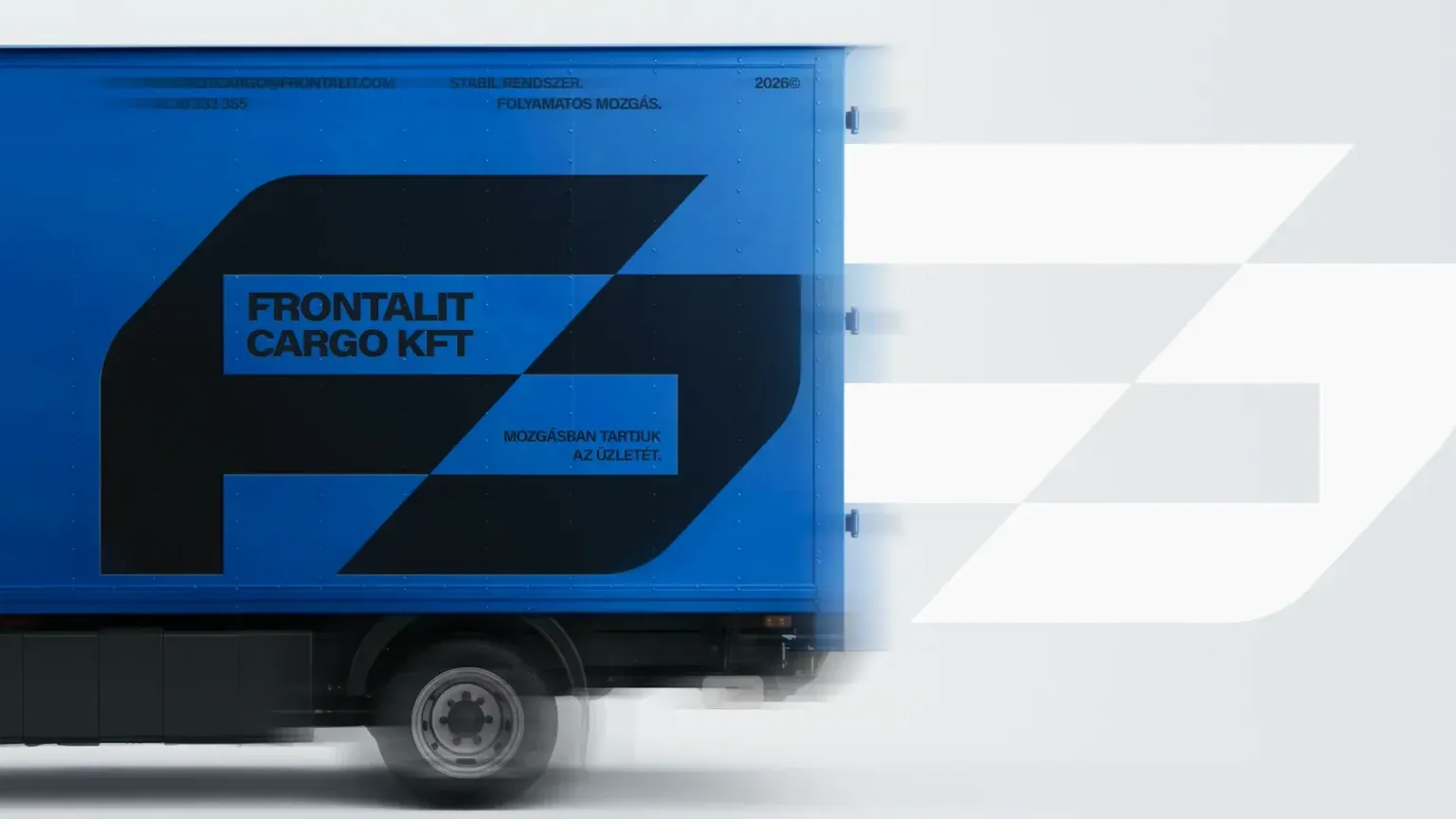 Frontalit Cargo identity For Frontalit Cargo, the vehicle livery and the digital touchpoints were part of the job alongside the name change, so the scope was set by the complete brand building and the number of touchpoints together. See the case study
4. How you can shape it
A good part of the scope is up to you. If you decide in advance who makes the call, and list the touchpoints you will need in the first year, the proposal becomes more precise and fewer rounds are needed during the design.
The number of people giving feedback during the design matters a lot as well. If the decision-makers are present both when the direction is chosen and when it is finalised, the feedback comes together in one round, and an approved direction does not have to be reopened later. If there are several of them, it is worth appointing one person to collect the feedback and pass it on to us in one piece.
It is also worth thinking about what your team will make. If you put together posts and proposals in-house, editable templates save a lot of time, and in that case it pays to set aside part of the design for them.
5. What to watch when you compare proposals
The totals of two proposals can only be compared if they contain the same things. So it is worth checking item by item what is handed over and what is left out.
- How many directions are shown at the start of the design, and how far they are worked out.
- Whether a brand strategy workshop is included, or the designer only works from your existing idea.
- How many touchpoints you receive fully designed, and which ones.
- Whether you receive the source files and the guidelines, and whether these are editable.
If an item is missing, ask about it. Quite often the brand guidelines or the source files are exactly what a cheaper-looking proposal leaves out, and these then have to be ordered separately later.
If you are unsure what scope to start with, a brand audit is a good first step. It shows what you can keep from your current look and what needs a new design, which also makes the cost of the next step easier to plan.
6. Frequently asked questions
Why don’t you publish a price list?
Because the scope of two brand identities can be very different, and an average price would be misleading. After our first conversation we send a written proposal listing the deliverables, so you can see in advance what you will receive.
How long does it take, and how is that linked to the cost?
The two move together, because both are set by the number of touchpoints and the rounds of decisions. After our first conversation you receive the schedule together with the proposal, so you can see how much time each phase needs.
Can we work in phases?
Yes. Many clients start with the logo, and we build the full identity on it later, once more touchpoints are being made. In that case we design the logo to be ready for this from the start.
How does the scope of a rebrand differ from that of a new identity?
With an existing brand, we first have to review the old touchpoints and decide what stays. This is extra work, and in return the switchover becomes easier to plan, because you can see in advance which material you replace and when.
Does the cost include printing or building the website?
The design and the print-ready files are part of the proposal. Printing is a separate item, and website development is optional, so we take it on if you ask, or hand the designs over to your own developer.