
1. What demand wants
Picture the market with two sides. On one side is demand, which has an idea of what it wants and a current situation in which it is not getting it yet. On the other side is supply, which should provide exactly what is missing between the two.
In reality supply often delivers something else, sometimes only half of what is needed, sometimes missing the point entirely. From the outside this is strikingly obvious, and it is almost hard to understand why the players themselves do not notice.


2. Why it is easier from the outside
We spot mistakes in other people’s work much faster than in our own. We see where the other person gets it wrong, and how we should do it right almost suggests itself. You can use this attention deliberately in your own market, and all it takes is a little time and your customers’ opinions.
3. How to start
- Open Google and search for a product or service you also offer, or for the name of a competing brand.
- Add “reviews” or “ratings” after it, or the local word if your market speaks another language.
- Read the results and note down what keeps coming up.
There are platforms where you will find feedback specifically, and they are worth going through. These include Google business profiles, Facebook, Trustpilot, Tripadvisor and Yelp, and for service providers Clutch as well. If your market has its own review platform, such as an industry directory or the product pages of a large webshop, do not skip it either.
4. Three-star reviews
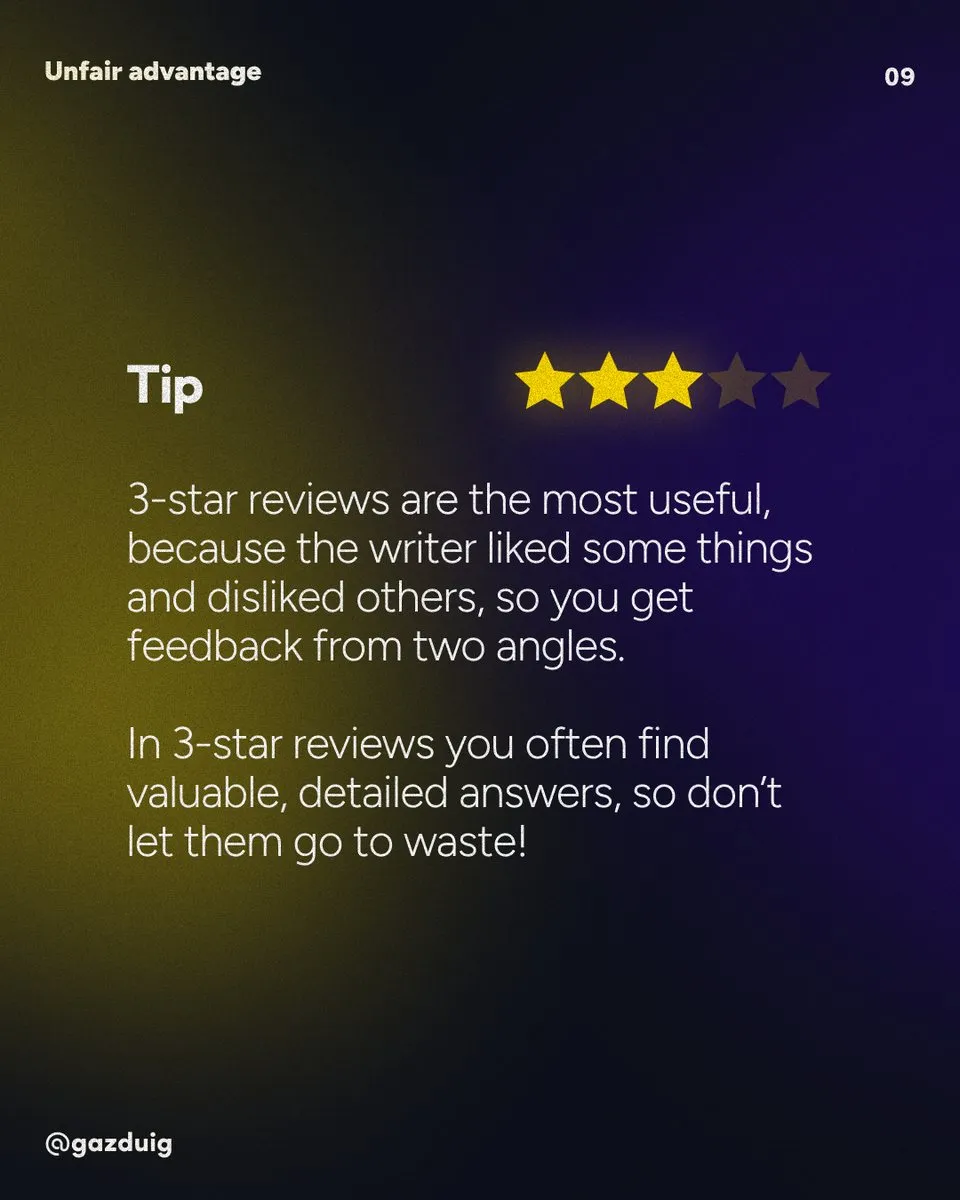
Most people pay attention to one-star and five-star reviews, yet three-star reviews teach you the most. Their authors liked some things and disliked others, so a single comment gives you feedback from two sides.
Three-star reviews are also often longer and more detailed, because whoever writes one usually wants to explain why they did not give more. These valuable answers easily get lost between enthusiastic praise and angry rants, so it is worth filtering for them separately.
5. Your own reviews
While you are at it, read the reviews of your own business with the same eye. Praise is easy to enjoy, yet three-star comments show where your customers’ experience slipped into average, and these points can usually be fixed with small changes.
It is worth paying attention to your replies as well. A calm reply that addresses the problem often tells later readers more about you than the review itself, because they can see how you handle things when something goes wrong.
6. What to do with your notes
Once you have a list of recurring complaints, look honestly at which ones apply to your business too. Perhaps your delivery is slow as well, or your product page is missing an important piece of information just like your competitor’s, so customers call to ask or buy elsewhere.
Fix in your own business the mistakes others keep making, and offer a better service and a better product than your competitors. You do not need to invent anything new for this, your customers have already written down what they need, and you only have to read it.
The same idea works for your ads and your website. If reviews say customers struggle to get something from your competitors, that can be a strong message in your ad, and a good starting point for reviewing your own site.
The original post on Instagram