The scope is set mostly by the number of screens and by how much custom behaviour they need, for example a booking flow or a filterable product catalogue. On top of that, it matters whether your copy and your brand identity are ready, and whether you ask us for development too or we hand the designs over to your own developer.
1. The factors that drive the scope
| Factor | Smaller scope | Larger scope |
|---|---|---|
| Number of screens | A few template pages from which the other subpages are built. | Many custom subpages, each with its own content structure. |
| Behaviour | A presentation site with a contact form. | Booking, filtering, account management or payment, with many states and error messages. |
| Content | The copy and the images are ready. | We shape the copy and the structure of the pages together. |
| Brand identity | There is a finished identity, and the interface builds on it. | The identity is part of the design, or is being renewed now. |
| Views | Desktop and mobile views for the main pages. | Desktop and mobile for every page, with a design system and a clickable prototype. |
| Development | We hand the designs over to your own developer. | We take on development too, as an optional, separate item. |
When counting screens, it is worth separating templates from custom pages. A blog post or a case study page, once designed, can hold any amount of content, while a booking flow needs separate decisions at every step, from the error messages to the confirmation.
2. Which scope suits you
The smaller scope is enough if
- you present one service, and the main goal is an enquiry
- your copy and your brand identity are already finished
- you have your own developer to build the designs
- you would like to add new subpages later
The larger scope pays off if
- people book or buy through the website
- you need many subpages that have to work consistently
- several teams will work on it, and you need a shared design system
- you would like to test the interface with users before launch
3. An example from our work
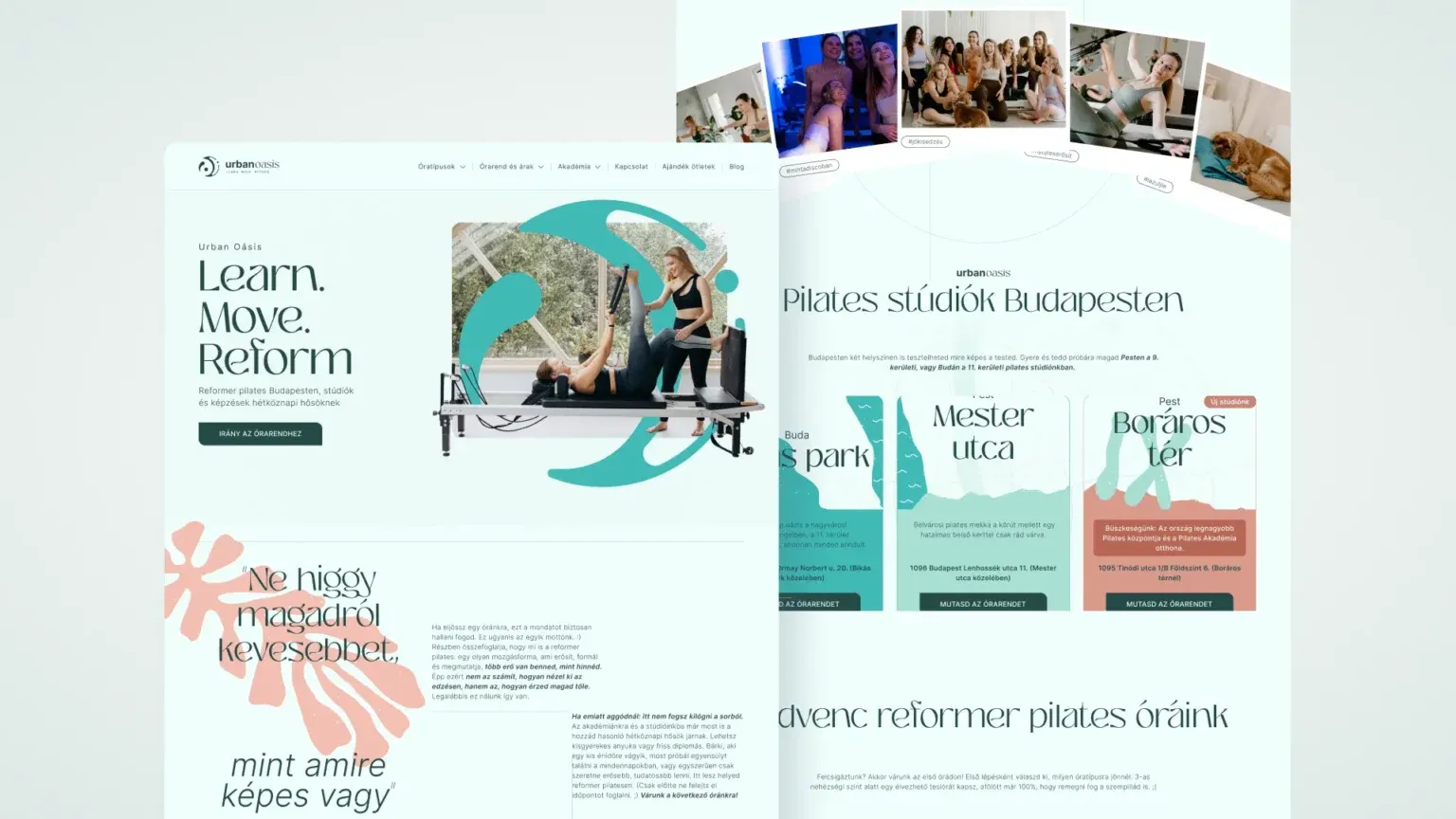 Urban Oasis UX/UI design At Urban Oasis several studios and a teacher training academy came together on one site, so the scope was set by the many subpages that had to work consistently, from class types to gift vouchers. See the case study
4. How you can shape it
You can save the most by deciding before the design what the main goal of the website is. Once that is clear, the number of screens can come down too, because it becomes obvious whether each subpage serves that goal.
Finished content matters a lot as well. If the copy and the images are not ready yet, how much space they take only becomes clear during the design, and that can lead to changes later. In that case it is worth tying the copywriting to the design, so the two are completed together.
It is also worth deciding what has to be ready for launch and what can wait for a second round. A blog or a careers page can be added to the existing system later, once the design system is in place.
If you are unsure what scope you need, UX/UI consulting or an audit is a good start. It shows what is worth keeping from your current site and what needs a new design.
5. What you receive at the end of the design
At the end of a full UX/UI design you receive four kinds of material. The user journeys show where visitors go from where, and on the clickable prototype you can try out how everything works before development.
The design system records the building blocks of the interface, from buttons to form fields, and the developer-ready screen designs are made for both desktop and mobile. These two are what keep your later costs down too, because a new subpage can be put together quickly from the existing elements.
If a proposal leaves out the design system, the first pages may be ready sooner, but every later extension starts with redesign. For a website planned for the longer term, it is worth counting on it from the start.
6. What to watch when you compare proposals
- How many pages you receive fully designed for desktop and mobile.
- Whether it includes a clickable prototype on which you can try the behaviour before development.
- Whether you receive a design system from which later pages can be built.
- Whether development is part of the proposal, and if so, which platform the site will be built on.
7. Frequently asked questions
Why don’t you publish a price list?
Because the scope of two websites can be very different, and an average price would be misleading. After our first conversation we send a written proposal with the deliverables and the schedule.
Do you take on development as well?
Yes, if you ask. Development is optional, and we can also give the designs to your own developer in a developer-ready form.
Can we work in phases?
Yes. We often start with the homepage and the most important subpages, and the other pages are made faster later from the design system.
Where should I not cut corners?
On the mobile view and the most important path, for example booking or checkout. Many of your visitors arrive on their phones, and these few screens decide whether a visit turns into an enquiry or a purchase.
What else matters for a webshop?
The processes matter more than the number of products. The basket, the shipping and payment steps, filtering and account management all mean separate screens and states, and these set the scope.