1. The turning point
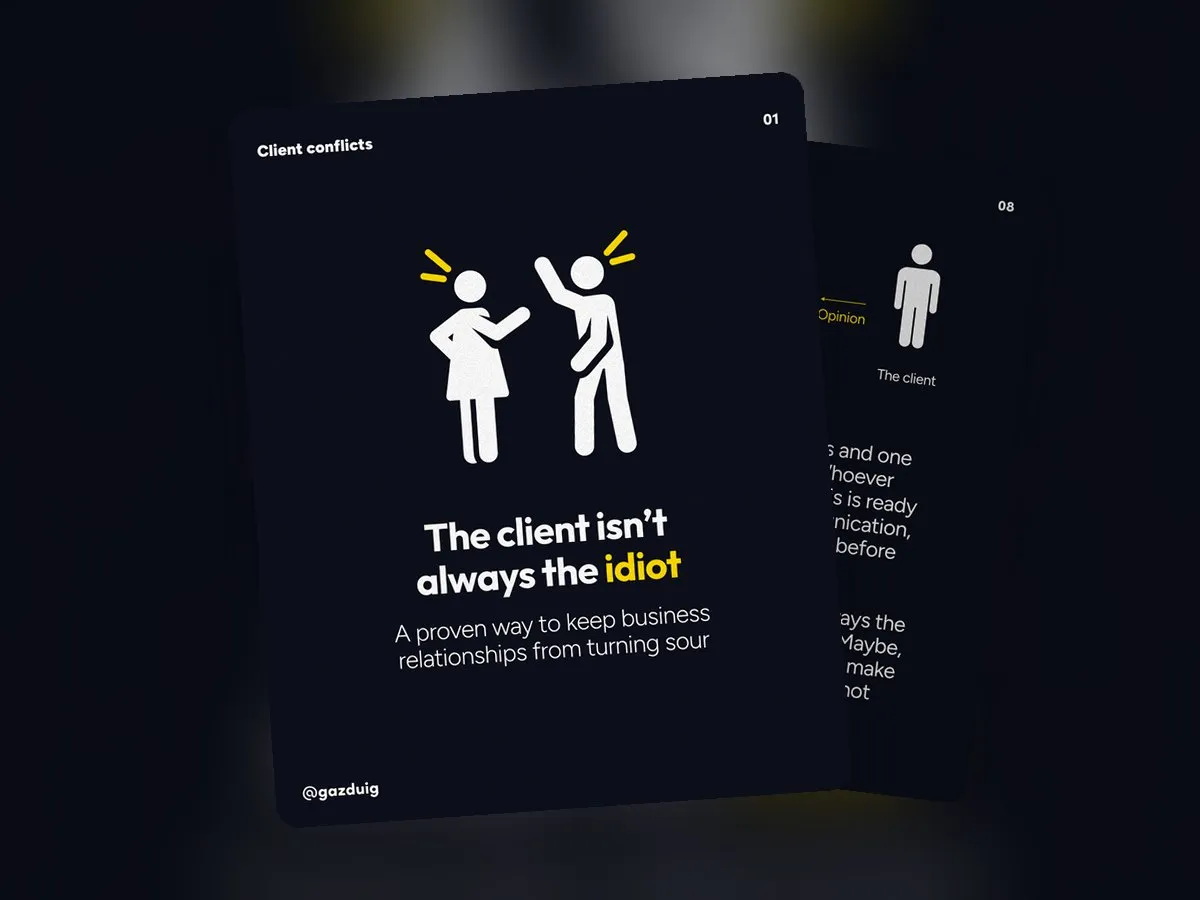
In many collaborations the two sides come to disagree about something sooner or later. That in itself is entirely natural, yet it is a major turning point in the life of a business relationship, because this is usually where the thought that poisons everything rears its head. They are the idiot.
For anyone who thinks this, the picture is simple. The other person alone is to blame, since they are the idiot and I am not. Yet a relationship always has two sides, so in a dispute both of us are in it.
2. Our own part in it
The solution has two important parts. The first is accepting that in any kind of relationship one side’s behaviour affects the other’s, and the same is true the other way round. If a client suddenly grows impatient, it is worth looking at how we contributed to that.
Perhaps we replied late, or did not tell them in advance what to expect. These seem like small things, yet on the other side they easily add up to a loss of trust, and from then on the client listens to everything we say with more suspicion.
3. Criticism is about the work
The other half of the solution is understanding that when someone criticises our method or our work, that is a different thing from criticising us. Once we see this clearly, we are far less likely to think the other person is an idiot simply because they said something we did not enjoy hearing.
For a designer this is a particularly hard lesson, since we put a great deal of our own taste and energy into the work. Still, when a client says they do not like the logo, they are giving an opinion about the logo, and with a good question that opinion can turn into shared work.
4. Two opinions and one subject
A simple diagram helps most. The client stands on one side, you on the other, and in the middle is the thing you are discussing. You both have an opinion about it, and the argument really takes place between the two opinions, around the thing itself.
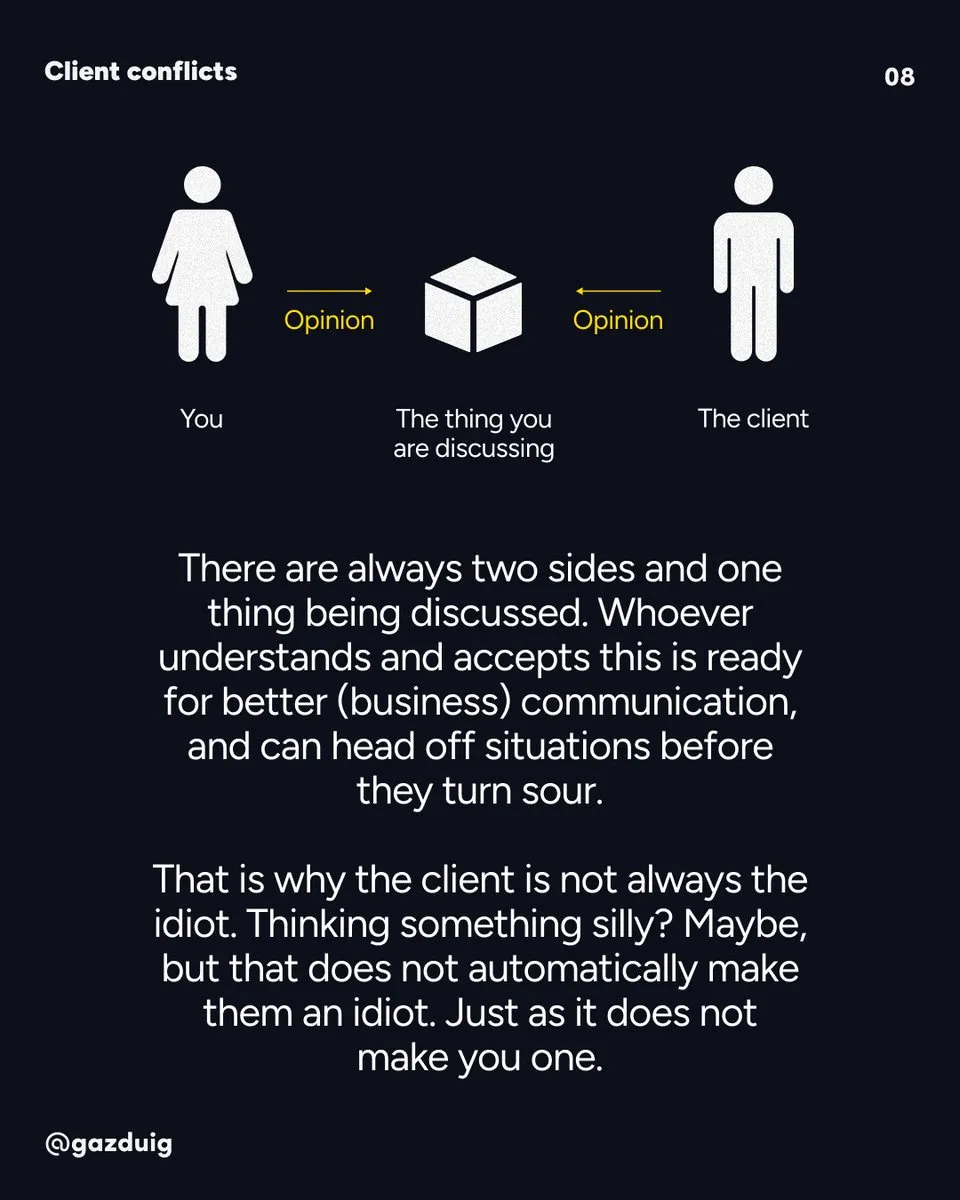
Whoever understands and accepts this is ready for better business communication, and can stop a professional disagreement from becoming a personal grudge. That is why the client is not always the idiot. Can they have a stupid idea? Perhaps, but that does not automatically make them an idiot, any more than it makes you one.
5. Who is right?
Does this mean the client is always right? No, and you are not always right either. Sometimes the client has a stupid idea, and sometimes you have one yourself.
In the eyes of a client I have had stupid ideas too, and I certainly will again. What matters then is whether I am working towards a solution, and for me there is only one answer to that question.
6. How the situation turns around
One behaviour always affects the other. If you stay calm in a tense moment and ask what lies behind the criticism, in time the other side will approach things differently too. A collaboration rarely breaks down over a single sentence, while lots of small gestures can move it in either direction.
That is why it pays to agree at the very start of a project how you will give and receive feedback, and who decides which questions. That way a disagreement lands in a framework you both know, and it is much less likely that either side takes it as a personal attack.
The original post on Instagram