1. The usual process
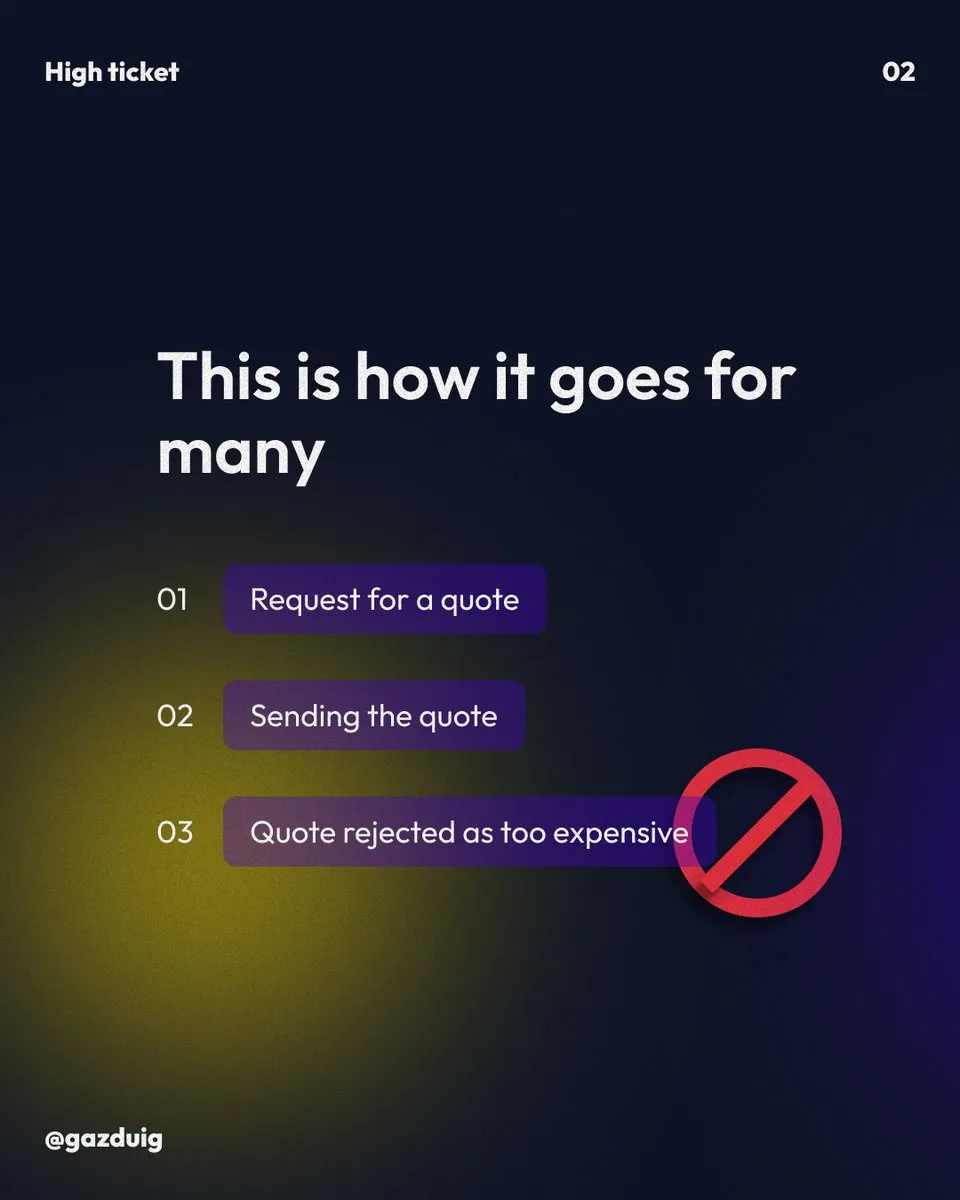
In many businesses selling has three steps. A request for a quote arrives, you send the quote, and after a few days of silence the answer comes that it does not fit the budget right now. For smaller jobs this can even work, because the decision is quick and the client risks little.
On a larger project, though, the person on the other side sees a number at the bottom of a PDF and nothing else that speaks for it. They often do not decide alone either, so they also have to be able to explain to colleagues or their manager why they would work with you of all people.
2. Why they say no
The amount itself is rarely the reason for a rejection. Far more often the client can already see the price but cannot yet see the value, because nobody has shown it to them. If you think through what is missing from their decision at that point, you usually run into these.
- They only see a price, with nothing behind it to justify it.
- There is no trust between you yet.
- They cannot see your expertise.
- They cannot see that you understand their problem.
- They do not know how the solution will unfold.
- They do not know why you are suggesting this particular solution.
None of these is the price’s fault, and each one can be answered before the quote is even written. The key lies in the detail, in building up step by step, on the way to the quote, everything that justifies the price at the end.
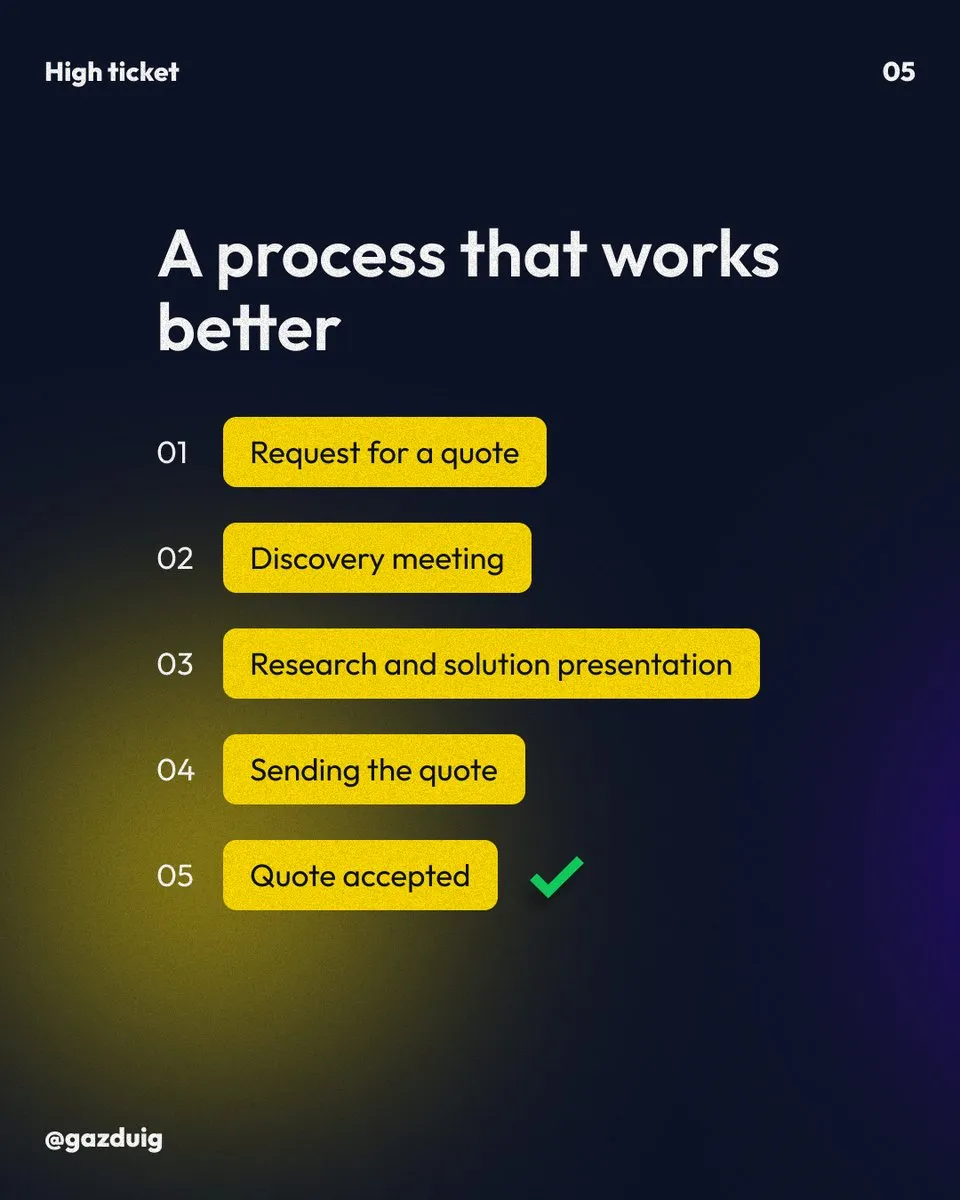
3. A process that works better
In our practice two steps sit between the request and the quote. First a short conversation that the industry calls a discovery meeting, then some research whose findings and proposed solution we present to the prospective client. The quote only comes after these, and by then the client knows exactly what they are paying for.
4. The discovery meeting
This is a short conversation of about half an hour where you get to know each other and you ask the questions. You can find out exactly what the problem is, what triggered it, and where the client wants to be by the end of the work together.
After the conversation you are no longer strangers, and you can make a good impression before any number is mentioned. Along the way you learn the prospective client’s tone and the words they use, which you can echo later in your materials, and you get the details without which you would only be guessing at the solution.
5. Presenting the solution
The conversation is followed by a short but thorough presentation. It can include a concise market or SWOT analysis, a description of the workflow and an introduction of yourself, depending on what the client needs to make the decision.
With the presentation you can show that you understand the problem and point out other areas worth working on, which can later lead to more work together. It is another meeting, so the relationship deepens too, and you can present the whole thing in the client’s own language, with references that would work in their situation as well.
6. What the client sees at the end
By the time the quote arrives, the client sees a whole story around the price. Professional trust has formed between you, they can see that you understand their problem and can solve it, they know how the solution will unfold, and they understand why you are suggesting this approach. Along the way they often realise that they would rather not live with the problem any longer.
This method works well if you sell some kind of digital service, and it is how we work at Gazduig, though it holds up for more expensive products too. It takes more time before the quote, and in return you end up in a conversation where the price is only one consideration among many.
What should go into the quote itself, once all the information is in your hands, is the subject of the follow-up article.
The original post on Instagram